Embracing Differences: Lessons from the Weeds and Wheat

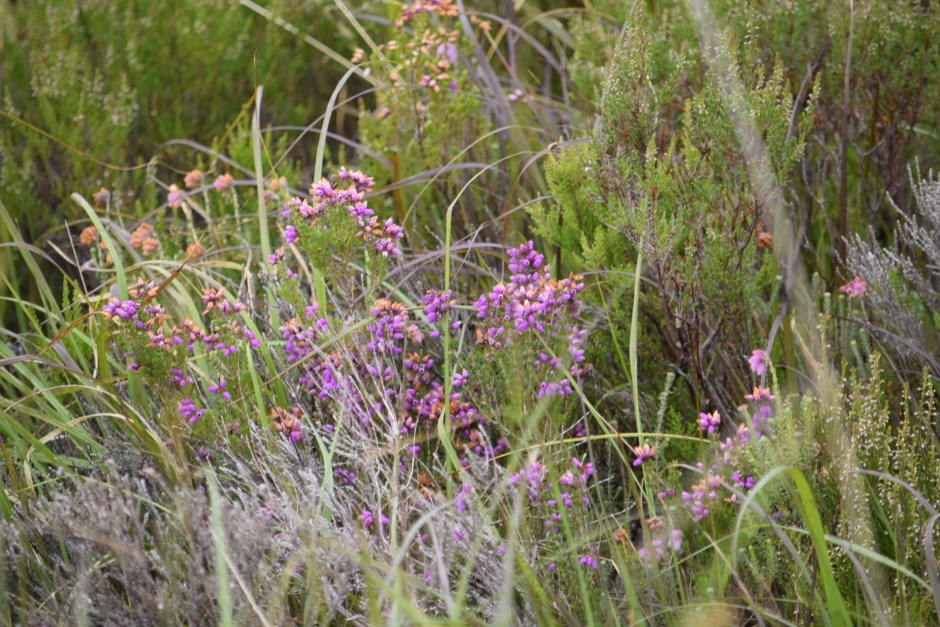
In today’s parable, the Master indicates that the weeds should be allowed to grow with the wheat because if the weeds are removed, then the wheat may be damaged. At face value, it appears that this parable is about the end times when the angels will separate the believers from the non-believers, but I caution us from jumping to that conclusion. I caution us about assuming that there is such a thing as those that are in and those that are out, and I do so because binary thinking is not only dangerous, but it is usually wrong. It is natural for us to want to have clarity, and on the surface this parable provides that: the people who follow the rules, the wheat, will enter the Kingdom and the people who don’t, the weeds, will not. The slaves, who represent us, want to hurry up and get rid of the weeds—the people that do not fit our vision of who belongs.  

The difficult truth is that we live in a world consumed by this exact kind of weeding. Our current landscape is defined by deep, exhausting partisan divisions and international standoffs. Whether it is political polarization here at home where we view the “other side” not just as neighbors with different ideas, but as enemies, or global conflicts flashing on our screens, the secular world is constantly demanding that we sort humanity into binary columns. We are told to pull up the weeds, to cancel, to exclude, and to isolate. We want the field clean, and we want it done now.

But when we do this, we miss the whole context of the world Jesus was talking to. In ancient Jewish teaching, a parable like this was called a mashal, basically an extended metaphor or story used to make a comparison. And Jesus follows it with a nimshal, which is just the explanation of the story. You see this structure all the time in rabbinic commentaries, where stories of kings planting orchards are used to show God building up or pulling up people based on whether they follow his will.

But Jesus puts a much more urgent spin on his explanation. He says that at the end of the age, the angels will collect the “evildoers” and throw them into the furnace. Now, in English, “evildoers” sounds like a word for the absolute worst villains of history. But the actual Greek phrase Matthew uses, poioūntas tēn anomīan (poy-OON-dahss teen ah-noh-mee-ahn) takes the word for the Law, the Torah, and puts a negative on the front of it. It literally means living against the Law 

And what is the Law according to Jesus? He tells us later in this same Gospel: Love the Lord your God with all your heart, and love your neighbor as yourself.

So, if you look at it that way, the weeds aren’t people who hold the wrong opinions or fail our social litmus tests. The weeds are simply those who live against the law of radical love. The wheat, the righteous, are the ones actually enacting that love.

God has been lovingly tolerating humanity far longer than we ever will and it is not our job to decide who belongs; our job is to love each other like Jesus did. The hardest part of this whole situation is that we do not naturally love each other, mostly we just tolerate each other and try our best not to exclude the people that annoy us the most. So on one hand we know it is so much easier to just do what feels right in the moment, to just take care of ourselves and the people who are closest to us; but on the other hand our entire faith tradition says that we are supposed to do the complete opposite; we are supposed to give aid and comfort to everyone, no matter what; we are supposed to include everyone, no matter what; we are supposed to love everyone, no matter what.  

Earlier I cautioned us about binary thinking because it can lead to misinterpretation and inaccurate assumptions. The reason the master, who is God, said to leave the weeds is because he knew that some of those weeds might actually turn out to be wheat. There are many plants in my garden that I mistake, every year, but I leave them because I suspect that they might be flowers and when they do flower, I am grateful that I left them. It is also worth mentioning that a weed is only a plant growing in a location you do not want it to be in. It is very possible to cultivate a weed into a beautiful thing, but it takes time and that is what God in their infinite patience knows.

The process of becoming people of love takes time, and if we kick people to the side too soon, if we write off entire groups of people because of the political signs in their yard or the country they reside in, then they will not have the chance to grow into the people God intends them to be, and if in the end they don’t “make it”, that is between God and them.

Now, focusing on doing God’s will and loving people doesn’t mean we are earning our way into heaven by our own merits. This isn’t about “works righteousness” meaning doing morally correct things. Think of it like a mechanic who fixes up a broken-down car. Once the car is fixed and saved from its old state, the owner is expected to actually start driving it to get somewhere. If you just refuse to drive it, you completely ignore and undermine all the hard work the mechanic just did. It’s the same thing here. Jesus saves us from our sins so that we are freed up to actually do good works and live out that righteousness. Refusing to love, refusing to do those good works, basically cancels out the whole purpose of what Christ did on the cross. The parable is showing us what it looks like when saved believers actually live out that righteousness.

So, the only weeding or dividing, we can, or even should do, is within ourselves. We need to look deep into our souls and weed out those traits of our character; our tribalism, our judgments, our self-righteousness, that inhibit our ability to love like God. Daniel Berrigan, who was a Jesuit priest, once said, “If you are going to follow Jesus, you better look good on wood.” Let me repeat that, “If you are going to follow Jesus, you better look good on wood.”  

The message of Jesus was radical. It was radical two thousand years ago and it is radical today because it is contrary to human nature and that is the point. Jesus was nailed to a piece of wood because he told people to love each other and that idea was so radical, so contrary to the way his society thought, that they killed him. You see, Jesus was killed because people thought he did not belong, they thought he was the weed. Whether we are a weed or wheat does not matter because we are all children of God and we are all loved wholly and equally, even though we are really bad at loving other people.  

Jesus was willing to die for his radical message of love; he was willing to look good on the wood, are we ready for that? Are we ready to love so deeply, across ideological and political divides, that we will face discomfort or even social “death” for that love? My guess is no, and in the end, what matters is that we try to love each other, and when we fall short, not if, but when, we work even harder to make sure that we don’t fall short again.

Hosanna! Understanding the Significance of Palm Sunday

Traditionally Palm Sunday is a day we experience contradictions. We parade with palms and celebrate the day Jesus arrived in Jerusalem, the capital, the place from where God reigns over the kingdom of Israel and near the end our hopes are dashed as we recount the death of Jesus by reading the Passion. There is a movement in the church to end this practice and it is a movement that I support. Palm Sunday highlights an important piece of the story of Jesus, and an important component of what it means to be his disciple, but that component gets overshadowed by the emphasis placed on his death.

When Jesus arrives at Jerusalem he has been spreading his message of love for three long years. He has healed the sick, cast out demons, raised the dead, but more importantly he has questioned the status quo. He has questioned the authority of Rome, he has questioned the authority of the temple, and he has questioned the authority of his listeners’ hearts. No one is spared and nor should they be because Jesus was not sent to be the voice of God for just one group, the right group, Jesus was sent to be the voice for ALL.

On the first Palm Sunday, which was not a Sunday, Jesus descends from the hills surrounding the city greeted by thousands of inhabitants shouting Hosanna, Hosanna, Hosanna in the highest! Or something like it. Hosanna is an Aramaic word that literally means “Save (help), I pray!” and it only appears in the gospels in relationship to this moment in time. The shouting of Hosana is a sign that the people are ready, they are ready for something different, they are ready to be out from under the thumb of the Roman emperor, they are ready to be out from under the oppressive rules of the temple, but are they truly ready for what these hopes will cost?

As the procession of palms enters Jerusalem from the east, another procession is entering through the west gate. Pontious Pilot has arrived with his legions to ensure that the city remain calm during Passover. Thousands of Hebrews descend on Jerusalem every year for the observance of Passover and Pilot is not going to take any chances of there being trouble due to recent grumblings of rebellion. So here we have two distinctly different processions, one that represents joy and hope; and one that represents authority and oppression. They meet, symbolically, in the middle in Jerusalem, a city which is described by Matthew as a city in turmoil.

So here we are, in the year 2026, symbolically recreating the procession from the east, calling and praying for God to Save us; but from what do we need to be saved? While some, as attested to by the No Kings marchers, argue that we need to be saved from government oppression, that is not it because that is a human matter. Jesus did not save the Hebrew people from the authority of Rome or even the temple and his death and ultimate resurrection are not about the political turmoil humanity creates for itself; it is about hoping in the possibility that some day we will be able to reconcile the turmoil that is within each of us.

The events we remember today and throughout Holy Week were real. We know this because they are in the historical record and I don’t just mean they are in the gospels. Our remembrance of them is consistent with our Hebrew roots as a faith tradition, but let’s not mistake remembrance for meaning. While we remember these events, we must also do the hard work of allowing the meaning of these events to renew and change us.

The turmoil in Jerusalem nearly 2,000 years ago was due to civic unrest caused by the juxtaposition to Imperial authority, temple authority, and this new guy spreading a cryptic message of love. For just a moment, try to picture the events of that day. You are standing in front of your house and from one direction you hear trumpets announcing the arrival of the Roman legions, and from the other direction you hear people shouting Hosana, save us! You have heard the trumpets of Rome many times and are used to them, so you turn your attention toward the east and wonder what all of this hubbub is about, then you realize it is about that guy Jesus who has been saying some pretty radical things, like love your neighbor, but on some level that makes sense to you and you want to hear more; but you also know that the priests don’t like this guy and have told you all to stay away. So, what do you do? Do you listen to the people in charge and stay away? Do you go hear what he has to say? Or do you go about your day and mind your own business because you have kids to feed and work to do? This decision is not an easy one, it creates conflict in you. On the one hand you are busy and need to get to work, but on the other hand you like some of what you have heard about Jesus and want to go listen? You feel conflicted, your thoughts are in turmoil.

The celebration of Jesus entry into Jerusalem is not just about the historical events, it is a reminder to us that the turmoil caused for the people who experienced it is the same turmoil that lives in us every single day. We are all Jerusalem on that day. We live in the turmoil, striving to be faithful to God’s command to love, while faced with neighbors who are frankly just jerks, which is not a strong enough word, but I leave it to your imagine the words I would like to use.

We are consistently and constantly bombarded with the opinions and actions of people who appear to hate their neighbors, who clearly only care about how everything affects them. We are told that we need to be civically active, that we must obey the law, that we must pay our taxes. We are consistently disregarded by our employers as we slave away to ensure that they make money or in the non-profit world to ensure that government or donors’ money isn’t being wasted. All of these things, are nothing more than the Roman and temple authorities of our time and the pressure we feel from these external sources is very real and is often in conflict with what Jesus teaches us, creating internal conflict and turmoil.

How can we be faithful followers of Jesus, a people who seek to love all people when human existence is so messy? We start with Hosana! Save me I pray! And then we gather around a table and share a meal, because when we are sharing a meal, we can forget about all those other things; this is what we do on Maundy Thursday.

After our meal we take some time to think about from what we wished to be save. What is the one thing we want to change about ourselves and we ask God to help us and they will; but only if we believe they will. We call this concept placing our burdens at the foot of the cross and it is what we do on Good Friday.

Having placed our burden on the cross and we allow that burden to die with Jesus, because that is what it is all about. It is about God carrying our burdens with us and for us, so that they are no longer burdens. Once we have done that, they are buried with Christ and if we truly allow them to be buried, they will no longer be a burden; and we will still be here as a resurrected people. As people who, because of their faith, were able to let go of the turmoil, if only for a few moments.

The cycle of turmoil, death, and resurrection is not a one time thing, it is a cycle that is repeated time and time again, and it is a cycle we are called to repeat every day of our lives, which is why we gather as a community week after week in a sanctuary from the turmoil of the world, to break bread, and to celebrate the resurrection of Christ Jesus.

My invitation to use all is to enter Holy Week with the intention of fully immersing ourselves in this process so when we gather on Easter morning the resurrection holds new meaning for us all.

The Role of Boundaries in Spiritual Transformation during Lent

Boundaries are a significant part of modern life. For some they play a vital role in maintaining a sense of control and for others they are a challenge to their sense of control. This concept is heightened by the fact that we live in America, a nation built on the idea that boundaries are meant to be broken. In 1893, historian Frederick Jackson Turner, outlined his argument that it had been the frontier, or the boundary between the known and unknown, that had defined American character and democracy. To that point he argued Americans had always identified with the possibilities that lied beyond the boundary and that our desire to know what lies beyond shaped us and instilled a sense of curiosity in the unknown as well as a willingness to cross established boundaries to satisfy that curiosity. Whether it be the Appalachian line drawn by the King in 1763, the countless barriers placed in front of the civil rights of all citizens, or the race to put a man on the moon, Americans have always seen boundary’s, not as a limitation, but as a challenge.

For Adam and Eve, the boundary was the tree of the knowledge of good and evil and the serpent was their own curiosity. If God did not want creation to have such knowledge then they would not have created the knowledge in the first place, nor would they have placed it within arm’s reach; I do not believe that the creator of the universe didn’t know that Adam and Eve would eventually eat the forbidden fruit, nor do I believe that God placed the restriction on eating the fruit as some cosmic test. Ultimately this story is just a story that reveals something about human nature. It reveals that when faced with a boundary we have the ability to cross the line, indicating that we have free will, which is vitally important because just as we can choose to ignore boundaries, we can also choose to love.

Prior to the fruit tree incident, Adam and Eve had no reason to fear God; they had no reason to fear anything. But once they ate, they learned the truth, which is that life is hard. They learned about hunger, thirst, pain, and death for the first time. They learned that God had been protecting them from the burden of free will by not denying it to them, but by putting off their loss of innocence for as long as possible. By delaying this inevitable weight of self-determination, the Creator allowed them to remain in a state of grace until they were ready to become the masters of their own destiny. The transition from the Garden to the wilderness was not merely a change in geography; it was a shift in consciousness. In the Garden, boundaries were external, a physical tree and a spoken command, but once that line was crossed, the boundary became internalized. Humanity moved from a state of passive being to a state of active becoming.

We trade the safety of the Garden for the dignity of the “Hard Life” every time we choose to grow. We accept the hunger and the toil because we refuse to be mere spectators in our own lives. We are a people of the frontier, defined not by the fences we build to keep the world out, but by our courage to look past them and ask what lies beyond. In our national history and our spiritual journey, we find that the boundary is not a wall; it is a horizon. It exists to define the moment of our next great choice, reminding us that to be truly human is to stand at the edge of the unknown and decide to step forward.

As we continue our journey through Lent, we find ourselves in our own version of the wilderness, standing between the comfort of what we know and the transformation of what is to come. Lent is, in many ways, a season of intentional boundaries like fasting, discipline, and self-restraint, but these are not meant to imprison us. Rather, like the frontier, these forty days serve as a perimeter that helps us define who we are when the distractions are stripped away. In the wilderness of Lent, we walk the same path Adam and Eve trod when they left the Garden: a path where hunger and thirst are real, but where the opportunity to rely on God’s grace is even more tangible. We use this season to examine the lines we have crossed in error and the new boundaries we must cross in faith, moving ever closer to the ultimate “boundary-breaking” event of the Resurrection.